 3D Printing in Stuttgart and Ludwigsburg
Upload your part and get an instant FDM price
Our online calculator gives you an instant, non-binding price estimate for many FDM parts. Upload your model, choose the material, layer height, infill and quantity, and see immediately how each setting affects the price. Before production begins, an engineer reviews the file and we confirm the final quote.
Cortez Engineering is more than a 3D printing supplier. We combine additive manufacturing with CAD design, reverse engineering, FEA and lightweight engineering. This is especially valuable when a part needs to do more than look right — it also has to perform reliably in service.
Important: The instant price calculator is designed for FDM/FFF printing. SLA, continuous-fiber carbon and metal 3D printing using SLM/LPBF are quoted individually after an engineering review.
Our additive manufacturing technologies
We do not use the same manufacturing process for every project. Geometry, loading, temperature, surface requirements, tolerances and quantity all determine which technology makes the most sense.
Instant price
FDM / FFF – engineering-grade polymer 3D printing
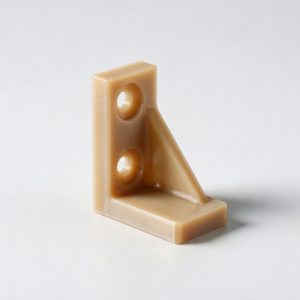
FDM builds parts layer by layer from controlled, melted thermoplastic filament. It is well suited to functional prototypes, housings, jigs, fixtures, brackets, replacement parts and low-volume production. You can select the material, quality, infill and quantity directly in the calculator.
On request
SLA – high-precision resin printing
Stereolithography cures liquid photopolymer resin using light. SLA is ideal for fine details, small radii, smooth cosmetic surfaces, presentation models and precise geometries. Because resin type, part orientation, support strategy and post-curing have a major impact on the result, we review SLA enquiries individually.
On request
Continuous-fiber carbon – lightweight reinforcement along load paths
Here, a thermoplastic matrix is selectively reinforced with continuous carbon fibers. Unlike short-fiber PA-CF, the reinforcement is not distributed uniformly throughout the material: fiber routing, part orientation and load path must work together. That is why the design and mechanical requirements need to be assessed before a quote can be prepared.
On request
SLM / LPBF – metal 3D printing
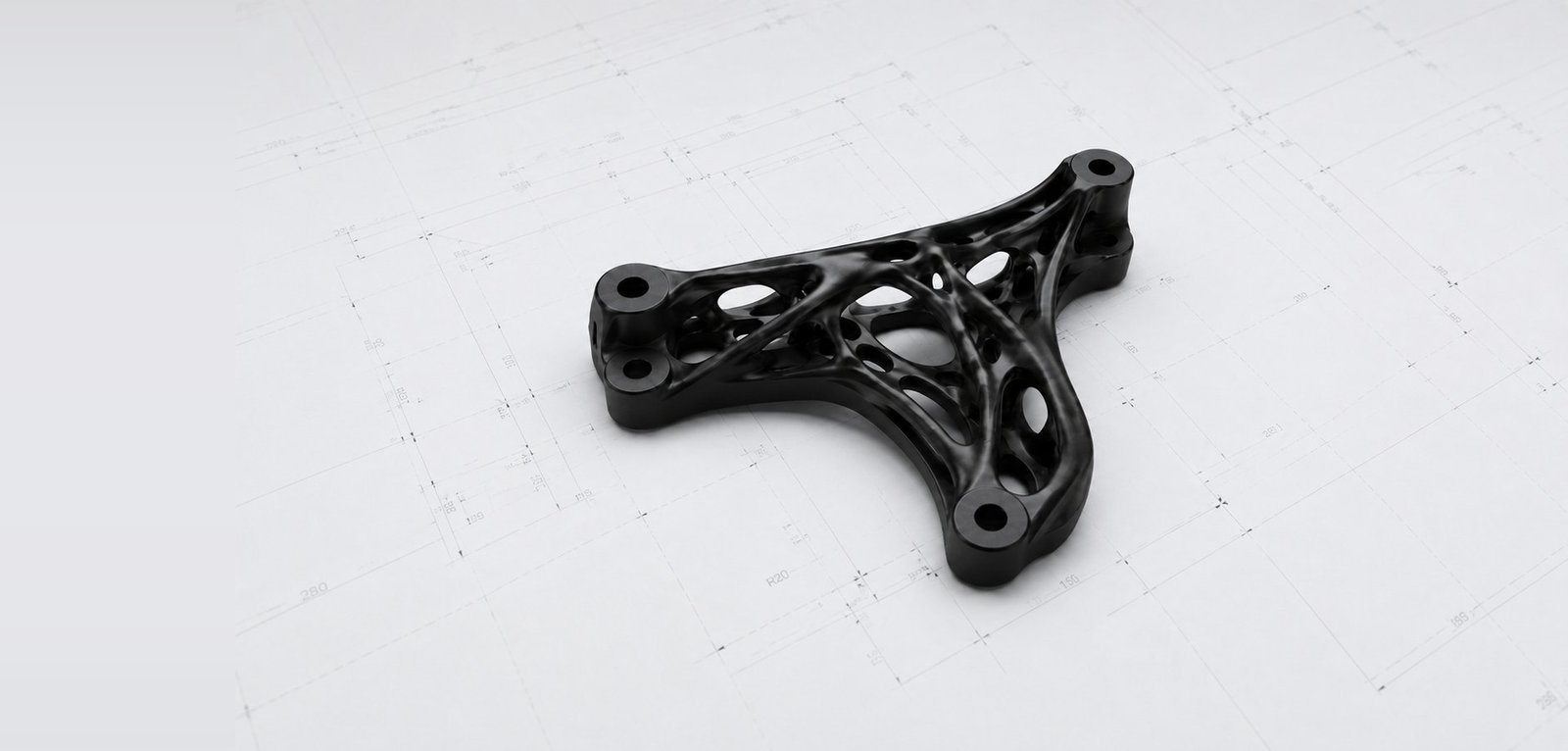
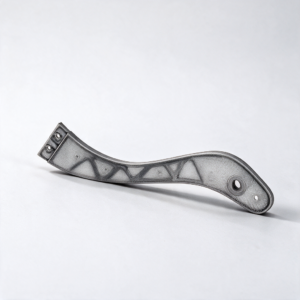
In laser powder bed fusion, metal powder is selectively melted by a laser. This makes it possible to produce complex parts in materials such as aluminium, stainless steel and titanium. Support strategy, thermal distortion, machining allowance, surface finish and any subsequent machining must be considered before production.
What does the online calculator include?
The calculator is deliberately focused on FDM printing. For this process, the main cost drivers can be derived reliably from the uploaded model and your selected settings:
- Part size and material volume – larger or more solid parts require more material and machine time.
- Material – standard polymers and engineering filaments differ in price, processing requirements and suitable applications.
- Layer height – finer layers improve detail and surface finish, but increase print time.
- Infill – infill affects material consumption, weight and, depending on the geometry, mechanical performance.
- Quantity – setup and inspection effort can be spread more efficiently across multiple identical parts.
- Additional requirements – colour, post-processing and special technical requirements are taken into account during the engineering review.
The amount shown is an indicative price. Before confirming the order, we review printability, wall thicknesses, build orientation, support requirements and critical functional surfaces.
Why SLA, continuous fiber and SLM are not priced automatically
For more demanding manufacturing processes, model volume alone is not enough to produce a reliable quote. A seemingly minor detail can significantly change the manufacturing effort.
- SLA: Resin system, part orientation, support placement, washing and post-curing all affect quality and production effort.
- Continuous-fiber carbon: The fiber must be placed where it can carry load effectively. Holes, load reversals, bending and loads transverse to the layers all require separate consideration.
- SLM / LPBF: Build orientation, supports, thermal stresses, powder usage, heat treatment and machining can all have a significant impact on cost.
For these technologies, we therefore provide an engineering-based quote tailored to your actual requirements rather than an arbitrary instant price.
Other important 3D printing technologies at a glance
There are also several established additive manufacturing technologies beyond the processes we offer directly. They are not selectable in the FDM calculator, but they can still be relevant when assessing a project. If another process is objectively better suited to the application, that decision should be made before an order is placed.
| Process |
How it works |
Key advantage |
Typical applications |
Availability |
| FDM / FFF |
Thermoplastic filament is deposited layer by layer. |
Cost-effective, wide material selection, functional parts |
Prototypes, jigs, housings, replacement parts, low-volume production |
Instant price in the calculator |
| SLA |
Liquid photopolymer is selectively cured using light. |
High detail and smooth surfaces |
Presentation models, small precision parts, master patterns, housings |
On request |
| Continuous-fiber printing |
Continuous reinforcement fibers are embedded in a polymer matrix. |
High specific stiffness along the fiber direction |
Lightweight brackets, structural parts, jigs, load-bearing components |
On request |
| SLM / LPBF |
Metal powder is selectively melted by a laser in a powder bed. |
Complex, load-bearing metal parts |
Motorsport, aerospace, mechanical engineering, cooling, lightweight design |
On request |
| SLS |
Polymer powder, commonly PA12, is selectively sintered by a laser. |
No separate support structures, efficient build-volume utilisation |
Functional parts and cost-effective low-volume production |
Not available in the instant price calculator |
| MJF |
Fusing and detailing agents are applied to a powder bed and thermally activated. |
Productive batch manufacturing and consistent part properties |
PA12 housings, brackets, snap-fit parts, low-volume production |
Not available in the instant price calculator |
| DLP / MSLA |
An entire resin layer is exposed using a projector or display. |
Very fine detail and short exposure times per layer |
Dental models, jewellery, miniatures and small precision parts |
Not available in the instant price calculator |
| Material Jetting / PolyJet |
Fine droplets of material are deposited and cured immediately. |
Very smooth surfaces, multiple materials or colours |
Design models, realistic prototypes and multi-material parts |
Not available in the instant price calculator |
| Binder Jetting |
A binder joins powder particles, followed by debinding and sintering. |
High productivity and complex geometries without melting material inside the printer |
Metal production parts, sand moulds and ceramic components |
Not available in the instant price calculator |
| EBM |
Metal powder is melted by an electron beam in a vacuum. |
Suitable for reactive metals and highly loaded parts |
Titanium parts for aerospace and medical applications |
Not available in the instant price calculator |
| DED / WAAM |
Metal powder or wire is melted during deposition using a laser, arc or electron beam. |
Large parts, repair and material deposition |
Tool repair, large structures and near-net-shape manufacturing |
Not available in the instant price calculator |
Note: “Not available in the instant price calculator” does not mean that a process is unsuitable. It simply means that our automated pricing is currently designed around FDM. Where necessary, we can assess whether one of our manufacturing routes is appropriate or whether another process would make more technical sense.
Which process is best for which type of part?
- Fast functional prototype or polymer bracket: usually FDM.
- Fine surface finish, small details or presentation model: often SLA.
- Lightweight structural part with a known load path: continuous-fiber carbon can be a strong option.
- Complex, highly loaded metal part: SLM / LPBF.
- Many robust PA12 parts without conventional supports: SLS or MJF may be more economical.
- Multi-colour or highly realistic design models: Material Jetting can offer advantages.
- Large metal part or repair application: DED or WAAM may be suitable.
Process selection should be driven by the load case, material, accuracy, surface requirements, quantity and post-processing — not simply by how well known a technology is.
Optimised infill: more material is not always the answer
The calculator includes an optimised infill option. The aim is not simply to print every part as solid as possible. We first assess how the geometry is loaded and which regions are important for stiffness and load transfer.
Depending on the application, wall structure, local reinforcement, infill, build orientation or geometry can be adjusted. For technically demanding projects, the assessment can be supported by FEA. The goal is a defensible material distribution — not a marketing claim that every part will automatically become both lighter and stronger.
If simulation or design optimisation is appropriate, we agree the scope and deliverables with you in advance.
Choosing the right material for FDM
The material must suit the real operating environment. Temperature, UV exposure, moisture, chemicals, wear and sustained loading are often more important than any single strength value.
- PLA – well suited to visual models, form checks and simple prototypes; not recommended for high temperatures.
- PETG – a robust all-round material for many functional applications and housings.
- ASA / ABS – suitable for parts exposed to elevated temperatures; ASA is generally preferable outdoors because of its UV resistance.
- PA / Nylon – tough and wear resistant, making it a good option for moving or mechanically loaded parts.
- PA-CF – reinforced with short carbon fibers; stiffer and more dimensionally stable than unfilled PA, but not equivalent to continuous-fiber carbon.
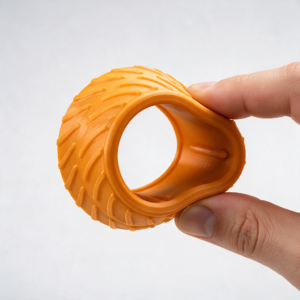
- TPU – flexible and abrasion resistant, for example for dampers, protective parts and gripping elements.
The calculator shows the material, colour and quality combinations currently available. For specialist materials or specific technical requirements, send us an enquiry with the operating conditions and required quantity.
PA-CF is not the same as continuous-fiber carbon
These two material systems are often confused. In PA-CF, short carbon fibers are distributed throughout the filament. They can improve stiffness, dimensional stability and print behaviour, but they do not act as continuous load-bearing reinforcement.
With continuous-fiber printing, continuous fibers are placed selectively within the part. The performance potential is higher, but it is also much more dependent on the design. Continuous fiber only adds value where it is routed correctly, properly anchored and loaded in the right direction. This is therefore not simply a material change in the calculator; it is a lightweight engineering task in its own right.
Quality, layer height and realistic tolerances
A smaller layer height improves visible detail, but also increases print time and cost. For most engineering FDM parts, a medium setting offers the best overall balance.
- Draft – for quick form, fit and installation checks.
- Standard – a balanced choice for many functional parts.
- Fine – for finer details and a smoother-looking surface.
- Ultra – worthwhile only when the geometry and application justify the additional production time.
FDM is a layer-based manufacturing process and is not a substitute for precision machining. Functional dimensions, fits, holes and sealing surfaces should therefore be clearly identified. Where tighter tolerances are required, we can allow machining stock and plan suitable post-processing.
Preparing your file for the calculator
- STL or OBJ – for automatic geometry analysis in the calculator.
- STEP or 3MF – useful for a more detailed engineering review and functional geometry.
- Use millimetres – helps prevent scale errors.
- Watertight geometry – the model should not contain open surfaces or invalid bodies.
- Identify functional dimensions – mark fits, threads, sealing surfaces and critical tolerances.
- Describe the operating conditions – loads, temperature, environment and quantity help us select the right material and process.
We review the file before manufacturing. If a wall is too thin, a tolerance is unrealistic or a different build orientation would be more appropriate, we clarify this before production starts.
From one-off parts to repeat low-volume production
FDM works well for both one-off components and repeat low-volume production. With several identical parts, setup, machine utilisation and quality control can be planned more efficiently. Unit cost, however, depends not only on quantity but also on build-volume utilisation, print time, scrap risk and post-processing.
For repeat orders, we can document materials, print parameters and inspection criteria. This improves repeatability and reduces coordination effort on subsequent orders.
Surface finish and post-processing
FDM parts naturally show visible layer lines. Depending on the material and application, additional finishing operations can include:
- Support removal and controlled deburring
- Sanding, priming and painting
- Drilling, reaming or tapping at defined locations
- Installing threaded inserts or metal bushings
- Bonding or assembling multi-part components
Let us know early which surfaces are cosmetic, dimensionally critical or mechanically loaded. This allows the build orientation to be selected with the required final result in mind.
Typical projects
- Functional prototypes and fit checks
- Jigs, gauges and assembly aids
- Brackets for automotive, motorsport and mechanical engineering
- Housings, covers, cable mounts and sensor mounts
- Obsolete replacement parts recreated through CAD design or reverse engineering
- Lightweight structural parts with continuous-fiber carbon reinforcement
- Detailed models and precision resin parts produced by SLA
- Complex metal parts in aluminium, stainless steel or titanium produced by SLM/LPBF
When does 3D printing make sense — and when does it not?
Additive manufacturing is particularly valuable for low quantities, complex geometries, short development cycles, customised parts and features that are difficult to manufacture conventionally. For very high volumes or simple standard geometries, injection moulding, machining, sheet-metal fabrication or other conventional processes may be more economical.
Our job is not to force every part into 3D printing. We assess whether the geometry, material and quantity suit the process, and we will tell you clearly if another manufacturing route makes more sense.
How your enquiry works
- Upload your file: Drag your model into the calculator and select the required FDM settings.
- Get an instant price estimate: The calculator shows the expected FDM cost based on your selections.
- Engineering review: We review printability, material, orientation, wall thicknesses and any special requirements.
- Final quote: You receive confirmation of the final price, lead time and technical execution.
- Manufacturing and shipping: Once approved, we manufacture the part and ship it locally or throughout Germany.
No production-ready 3D model yet?
A sketch, a damaged original part or even a technical concept can be enough to get started. Cortez Engineering supports CAD design, redesign and reverse engineering. For load-bearing components, FEA, topology optimisation or design-for-manufacturing adjustments may also be appropriate.
Describe the function, available installation space and operating conditions as clearly as possible. This allows us to assess whether FDM, SLA, continuous-fiber carbon, SLM or another manufacturing route is the best fit.
Calculate your FDM price →
Why Cortez Engineering?
- Instant online FDM pricing without unnecessary waiting for standard enquiries
- Engineering review before manufacturing
- Engineering support for design, simulation and lightweight engineering
- Multiple manufacturing routes from polymers and resin to continuous fiber and metal
- Direct engineering contact in the Stuttgart and Ludwigsburg region
- Shipping throughout Germany with communication in English, German or Spanish
Frequently asked questions about our 3D printing service
Which 3D printing technologies does Cortez Engineering offer?
We offer FDM/FFF printing, SLA resin printing, continuous-fiber carbon 3D printing and metal 3D printing using SLM/LPBF. FDM can be priced directly in the online calculator; the other technologies are quoted on request after an engineering review.
Which processes can I price directly in the calculator?
The instant price calculator is designed for FDM/FFF parts. You can select the material, quality, infill and quantity directly in the calculator. The final quote is confirmed after the file has been reviewed by an engineer.
Why is there no instant price for SLA, SLM or continuous-fiber carbon?
For these processes, manufacturing effort and part quality depend much more heavily on orientation, support strategy, post-processing, material system and design. An automatic price based on volume alone would therefore often be unreliable.
Do you also offer SLS or MJF?
SLS and MJF are not part of the FDM instant price calculator. We can assess your part from an engineering perspective and advise whether one of our available processes is suitable or whether SLS, MJF or another manufacturing technology would make more sense for the application.
What is the difference between PA-CF and continuous-fiber carbon?
PA-CF contains short carbon fibers within the filament and is processed like an engineering FDM material. Continuous-fiber printing places continuous reinforcement fibers selectively along relevant load paths. The design, fiber direction and loading therefore need to be considered together.
How accurate is the price shown?
The calculator provides a non-binding FDM price estimate. After upload, we review the model technically and then confirm the final price, manufacturing approach and lead time.
Which file formats can I upload?
STL and OBJ are suitable for automatic pricing. STEP and 3MF are useful for a more detailed engineering review. Functional dimensions and tolerances should also be clearly identified.
Do you only deliver in the Stuttgart area?
No. We are based in the Stuttgart/Ludwigsburg area, but we manufacture for customers outside the region and ship throughout Germany.
Can you manufacture a part if I do not have a CAD file?
Yes. Depending on the starting point, we can support CAD design, redesign or reverse engineering and create a production-ready 3D model.